Demography. In accordance with modern European patterns of demographic development,
Germany's population rose from about 25 million in 1815 to over 60
million in 1914, despite heavy emigration. The population continued to
rise in the first half of this century, though this trend was hindered by
heavy losses in the two world wars. In 1997, the total population of
Germany was 82 million. Of this sum, nearly 67 million lived in former
West Germany, and just over 15 million lived in former East Germany. In
1939, the year Germany invaded Poland, the population of what was to
become West Germany was 43 million and the population of what was to
become East Germany was almost 17 million. This means that from 1939 to
1997, both the total population and the population of West Germany have
increased, while the population of East Germany has decreased.
Showing posts with label Culture. Show all posts
Showing posts with label Culture. Show all posts

Culture of Germany - Location and Geography
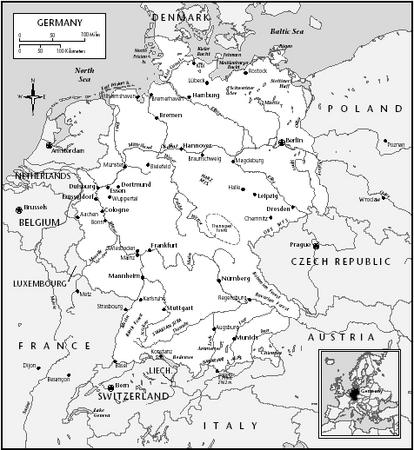 Germany is located in north-central Europe. It shares boundaries with
nine other countries: Denmark, Poland, the Czech Republic, Austria,
Switzerland, France, Luxembourg, Belgium, and the Netherlands.
Culture of Germany - Identification
Identification.
The name Germany is derived from the Latin word Germania, which, at the
time of the Gallic War (58–51
B.C.E.
), was used by the Romans to designate various peoples occupying the
region east of the Rhine. The German-language name Deutschland is derived
from a Germanic root meaning
volk,
or people. A document (written in Latin) from the Frankish court of 786
C.E.
uses the term theodisca lingua to refer to the colloquial speech of those
who spoke neither Latin nor early forms of Romance languages. From this
point forward, the term
deutsch
was employed to mark a difference in speech, which corresponded to
political, geographic, and social distinctions as well. Since, however,
the Frankish and Saxon kings of the early Middle Ages sought to
characterize themselves as emperors of Rome, it does not seem valid to
infer an incipient form of national
consciousness. By the fifteenth century, the designation Heiliges Römisches Reich ,or "Holy Roman Empire," was supplemented with the qualifying phrase der deutschen Nation , meaning "of the German Nation." Still, it is important to note that, at that point in history, the phrase "German nation" referred only to the Estates of the Empire— dukes, counts, archbishops, electoral princes, and imperial cities—that were represented in the Imperial Diet. Nevertheless, this self-designation indicates the desire of the members of the Imperial Estates to distinguish themselves from the curia in Rome, with which they were embroiled in a number of political and financial conflicts.
consciousness. By the fifteenth century, the designation Heiliges Römisches Reich ,or "Holy Roman Empire," was supplemented with the qualifying phrase der deutschen Nation , meaning "of the German Nation." Still, it is important to note that, at that point in history, the phrase "German nation" referred only to the Estates of the Empire— dukes, counts, archbishops, electoral princes, and imperial cities—that were represented in the Imperial Diet. Nevertheless, this self-designation indicates the desire of the members of the Imperial Estates to distinguish themselves from the curia in Rome, with which they were embroiled in a number of political and financial conflicts.
Italian culture traditions: Carnivals and celebrated holidays in Italy
 There are many celebrated holidays
in Italy separate from the National holidays in Italy. In the ancient Roman Empire at one stage there were 182 celebrated holidays in Italy and Rome!
Today in the smaller towns of Italy you can find the most colorful carnivals.
Tufara in Molise re-enact the sacrificing/burning of a figure called "Carnevale" a huge straw puppet and a metaphor for all the sins of the population.
Italian culture traditions: Italian religion
 Almost all Italians are baptized but perhaps only 40% are practicing
Catholics. About 85% of Italian Religion is accounted for by the
Catholic faith. The remainder of Italian religion is made up of Muslims,
Protestants, Jehovah's witnesses, Jews and Buddhists. Freedom of
worship is written into the Italian Constitution.
The Roman Pantheon was the first building in Italy (and perhaps in the whole world?) dedicated to the people of Rome to freely practice their religion/spirituality.
The general audience given by the pope is usually every wednesday morning at 11Am in St Peter's square or the Papal Audience Chamber. Tickets are free but you need to book. Fax the "Prefettura della Casa Pontificia" at fax.06 6988 5863.
There are also blessings from the library window at noon on Sundays.
Italian culture traditions: The Italian lover
 Apparently all is not well with the famed Italian lover. If
television is to be believed Italian males are having trouble finding
their customary 2 partners - the faithful wife that keeps house like
Mama does, and the whore-lover who fulfills the needs of the libido.
Another spanner in the works is that many Italian males (again, if television is to be believed) are suffering from an inferiority complex relating to the size of their equipment. Apparently Rocco Siffredi has created havoc for the average Italian who now believes his abilities to be short of the Italian median.
Italian culture traditions: Festivals
 The Italy food culture is celebrated by what can only be described as diet busting Italian food festivals. Bring it on.
In Rome it feels like a food festival every weekend. If money belts
are supposed to be buckled tighter nobody mentioned that to the Romans.
Oil, gold and property mortgages may drop and fluctuate but restaurants
in Rome are doing a brisker trade than ever!
Most food festivals, or should I rather say, more food festivals happen in Summer. In Rome and Lazio (amongst others):
Italian culture traditions: The Italy food culture

Italian Breakfast: Many a tourist has walked tummy grumbling out of their hotels in the morning. Italians are not big on the "most important meal of the day". Breakfast in Italy is usually a croissant and an espresso.
Luckily for some of us most Italian hotels are catching on and now serve plenty of cereals, yogurt, fruit, cold meats and bacon and eggs.
Italian culture: Identity

Subscribe to:
Posts (Atom)